
Cash, inflation and the cost of convenience

There are perfectly good reasons to keep money in cash. For instance, you might want reserve for unexpected expenses, be planning a renovation, or putting money aside for the next tax bill.
It’s easy to leave money with the same bank you’ve always used, particularly when moving it around each year can feel like just another tedious job to add to the list. Research reported by the Financial Times found that around £116 billion was sitting in more than a million UK current accounts with balances above £50,000, earning no interest.
Some of that money will have been there for a good reason, but if it’s not earmarked it could be a high cost for convenience. While the bank balance can look reassuringly stable, the cost of living is becoming more expensive, and over time, that difference really starts to add up…
Bread versus cash
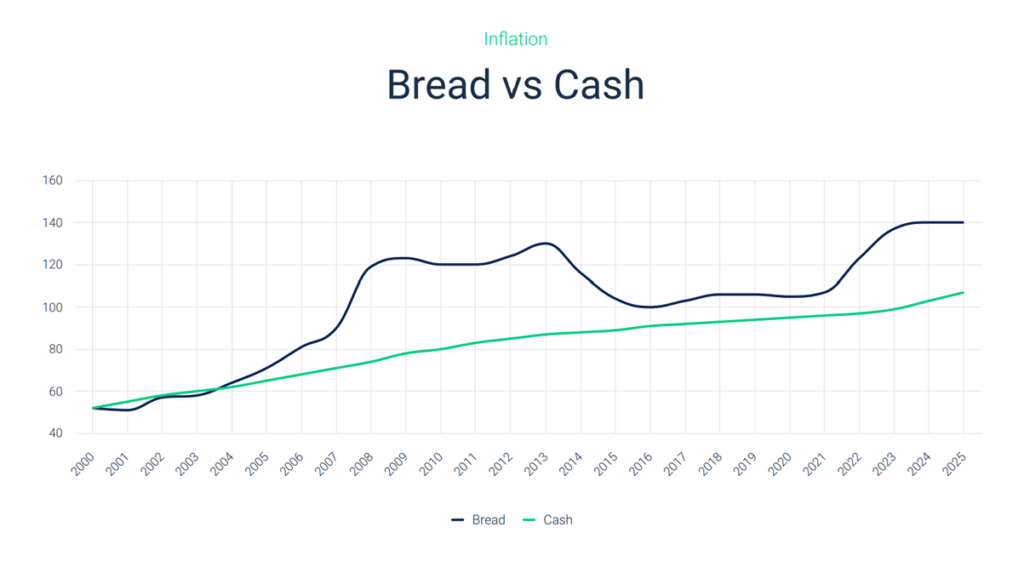
I’ve put together a graph comparing the price of an 800g sliced white loaf with money earning a selection of historical best-buy instant-access savings rates.
The loaf cost 52p at the start of 2000, so I’ve started the cash at 52p as well. By January 2025, the ONS bread price was £1.40, an increase of around 169%.[1]
Under the assumptions used in the graph, the cash grows to approximately £1.07. It has more than doubled, which sounds fairly respectable, but it would now buy around three-quarters of the loaf it bought at the beginning. Not ideal.
That cash line also assumes a monumental amount of effort on your part. You would have needed to find the selected best-buy account every year, move the money as required and reinvest all the interest. The calculation applies a simplified 20% tax deduction to the interest throughout.[2]
Most people are unlikely to manage their savings quite that diligently for 25 years, especially when banks change rates, introductory offers expire and life gives you other things to deal with. The graph is therefore an illustration of what active cash management might have achieved under those assumptions, a service very few people even know about, let alone take up.
What is the money for?
Before deciding whether to save or invest, I’d start with understanding when you expect to need the money and how much risk you can manage.
For example, if you’ve set aside money for an extension next summer, a competitive savings account may be entirely appropriate. You know roughly when the bill is coming, and a fall in investment markets shortly beforehand could put the whole project back.
Money intended for retirement in ten or fifteen years presents a different question. Holding it all in cash might feel comfortable, but you would also need to consider whether the interest is likely to support the spending you have in mind.
Investments offer the possibility of greater growth, with the risk of losses along the way. A diversified portfolio can spread that risk, and a longer timescale gives you more scope to cope with market falls. This is where active cashflow modelling and analysis can come into its own.
For someone already taking an income from investments, a cash reserve can also provide some flexibility over when to sell. The right amount will depend on their spending, other income and how comfortable they are with changes in the value of their portfolio.
Making the effort worthwhile
Even where cash is the right choice, it is worth checking what it earns and whether the account still suits you.
Of course, access matters, and so do withdrawal restrictions, introductory bonuses, minimum balances and the protection available for your deposits. A higher headline rate may only be useful if the conditions work for you.
There is also a reasonable limit to how much time you want to spend chasing small improvements. An extra 0.1 percentage point on £50,000 is £50 a year before tax; moving the same amount from an account paying nothing to one paying 3% would produce £1,500 a year before tax. Those are rather different reasons to spend an afternoon sorting out your savings.
You may decide to keep exactly the same amount in cash after reviewing it. That can be a sensible outcome, provided the decision reflects what the money is for, when you need it and what it is earning.
The account that was convenient when you opened it may still be suitable today, but it’s worth checking occasionally, rather than just assuming it still is.

Written by Alex Henry
Alex Henry, Partner, specialises in tailored wealth management and planning and helps clients to realise and deliver their current and future needs. Get in contact if you’d like to talk about your planning needs via or 07477 694255.
Please note the follow calculations
[1] Bread: ONS series CZOH: 800g sliced white loaf. January 2000: 52p; January 2025: 140p. Price increase: (140 ÷ 52 − 1) × 100 = 169.2%.
[2] Cash model: Starting with 52p and compounding the selected annual rates after a 20% deduction from interest produces £1.0735. That buys £1.0735 ÷ £1.40 = 76.7% of a loaf, a 23.3% reduction in purchasing power measured against bread. Applying the same rates without the tax deduction produces approximately £1.28.
The 52p is a scaled illustration using rates selected for a much larger deposit. The calculation assumes each selected rate applies for a full year and ignores tax-free allowances and changes in tax treatment. Actual savings tax depends on individual circumstances
A pension is a long-term investment not normally accessible until 55 (57 from April 2028). The fund value may fluctuate and can go down, which would have an impact on the level of pension benefits available. Past performance is not a reliable indicator of future performance.


Leave a Reply
You must be logged in to post a comment.